When the Symbol Becomes a Dependency
Article by the Metropolitan of Singapore in Apogevmatini: When the Symbol Becomes a Dependency (translated from Greek)
What if the Holy Fire could not be transported from Jerusalem to Greece? Would there still be a Resurrection? Would our experience of Easter lose its meaning if the Holy Fire did not arrive with the honors accorded to a head of state?
The question is not merely a practical one. It touches on the way we understand faith. Too often, we turn faith into something that must be visibly confirmed—accompanied by ceremonial grandeur, as though we are seeking tangible proof in order to feel certain. Yet Orthodoxy was not built as a system of guarantees or miraculous spectacles. It is an invitation to relationship—a way of being that is lived and experienced.
The Holy Fire, as it has been received at the Holy Sepulchre for centuries, is an important point of reference for the faithful. It is not, however, the foundation of salvation. The Church does not base its faith on a physical flame. The Resurrection is not an event that requires theatrical reinforcement. It is the victory over death, the overcoming of fear, and the invitation to a life that is no longer imprisoned by corruption and decay.
For long periods throughout history, Greek communities had no way of bringing the Holy Fire from Jerusalem. Yet the Paschal Liturgy was celebrated as always—without flights or state delegations. The proclamation “Christ is Risen!” resounded with the same power. This is because the light of the Resurrection is not an object to be transported. It is an experience shared within the community. It is the presence of Christ.
In modern Greece, the arrival of the Holy Fire has also acquired a national dimension. Nevertheless, the Church has never linked the validity of the Paschal Eucharist to the physical presence of the Holy Fire. Every parish celebrates the Mystery in its fullness. The Church does not depend on material evidence. It is a community that lives the experience of the Resurrection.
If, because of international developments, the Holy Fire is not brought to Greece, the Risen Christ will not be absent. What will be missing is only a symbol that we may have come to regard as indispensable. The real danger is not the absence of the symbol, but reducing faith to a need for spectacle. The Holy Fire is neither a talisman nor a mechanism of protection. It reminds us that God acts within history without imposing Himself as proof.
The Resurrection does not depend on flight paths or state protocols. It depends on a person’s willingness to step out of the confines of the self and enter into a relationship of life. If the heart remains sealed, even the brightest light will remain an external event. But where there is faith, every candle lit at the invitation, “Come, receive the light,” becomes a participation in a reality that is not confined by geographical boundaries. And the light you receive then from the priest will be no different from the Holy Fire.
God does not travel on airplanes. He is present wherever there is a communion of love. And the Resurrection is not nullified by changing circumstances. It is revealed through them.
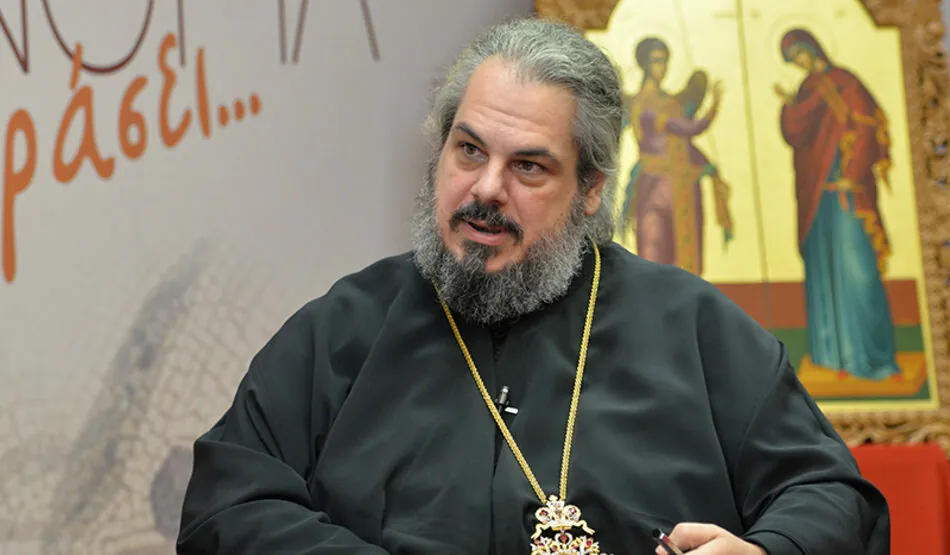
By Metropolitan Constantine of Singapore and South Asia
Originally published in the newspaper Apogevmatini.